
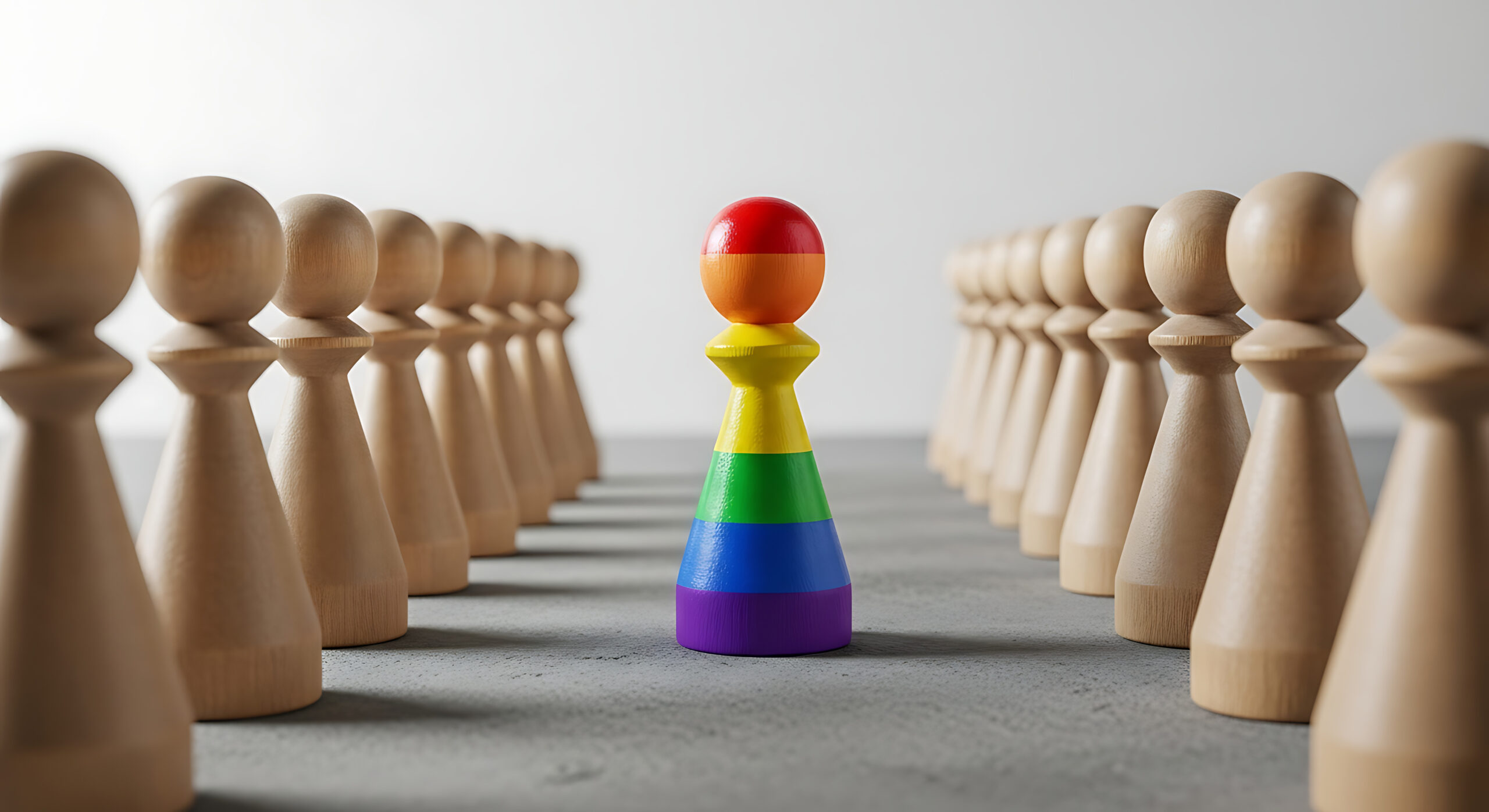
Exploring identity, leadership, and community beyond labels
We live in a world shaped by labels.
They are everywhere—on forms, in conversations, in institutions, and in the ways we describe ourselves to others. Labels help us make sense of who we are and where we belong. They offer language for experiences that might otherwise feel invisible. They create pathways to community, recognition, and, at times, collective action.
And for many people—especially those whose identities have been marginalized—labels have been essential. They have helped build movements, shape culture, and create spaces where people can be seen and understood.
But something is changing.
More and more, people are beginning to feel the limits of labels.
Not because labels are wrong—but because they are often incomplete.
They can’t always capture the complexity of lived experience. They struggle to keep up with how identity evolves over time. And they sometimes ask us to choose between categories that don’t fully reflect who we are.
The New Pride begins in that space.
Beyond categories
For much of modern history, identity has been organized through categories. These categories helped create order in a complex world. They allowed institutions to function, communities to form, and individuals to locate themselves within broader social structures.
But the same categories that create order can also create boundaries.
They can define who belongs—and who doesn’t.
They can simplify identities that are anything but simple.
They can turn fluid experiences into fixed positions.
In reality, identity is rarely static.
It shifts. It develops. It responds to relationships, environments, and new ideas. It is shaped not only by how we see ourselves, but by how we are seen—and how we choose to respond.
If identity is dynamic, then our frameworks for understanding it need to be dynamic as well.
Identity as an evolving conversation
This project starts with a simple premise:
Identity is not something we arrive at.
It is something we continue to explore.
Rather than treating identity as a fixed endpoint—something to be declared, defined, and settled—The New Pride approaches identity as an ongoing conversation.
A conversation shaped by:
- personal experience
- community and belonging
- culture and institutions
- learning and reflection
This doesn’t mean abandoning identity. It means engaging it differently.
It means allowing for movement, nuance, and contradiction.
It means recognizing that people can exist across multiple spaces at once.
It means making room for complexity rather than forcing clarity too soon.
Leadership in a more complex world
The same shift is happening in how we understand leadership.
Traditional models of leadership often rely on clear distinctions: leaders and followers, authority and participation, expertise and experience.
But in practice, leadership rarely looks that clean.
Leadership emerges in conversations.
It develops through collaboration.
It is shaped by relationships rather than positions.
In many cases, the most meaningful forms of leadership are not about directing others, but about creating space—space for dialogue, for shared understanding, and for collective action.
This is especially true in communities shaped by difference, where leadership often emerges from lived experience and a commitment to equity and inclusion.
The New Pride explores leadership not as a title, but as a practice—one that is relational, evolving, and deeply connected to identity.
Community without fixed boundaries
If identity is fluid and leadership is relational, what does that mean for community?
Traditionally, communities have been defined by shared characteristics—shared identities, shared locations, shared roles.
But increasingly, communities are forming around something else:
Shared purpose.
People gather not only because they are the same, but because they are interested in the same questions, the same challenges, and the same possibilities.
They connect across differences.
They learn from one another.
They build meaning together.
This kind of community is less about belonging to a category and more about participating in a conversation.
And that conversation is ongoing.
Who this is for
The New Pride is for people who are thinking about identity in deeper ways.
It’s for:
- LGBTQ professionals and thinkers navigating identity beyond traditional frameworks
- higher-education leaders and scholars exploring how identity shapes learning and leadership
- social justice and leadership practitioners working across difference
- students asking questions about who they are and who they might become
- thoughtful readers interested in culture, identity, and community
It’s also for those working in adjacent spaces—nonprofit leaders, alumni communities, and anyone interested in how people connect, lead, and grow together.
You don’t need to have the same answers.
You just need to be willing to ask better questions.
Leave a Reply
You must be logged in to post a comment.